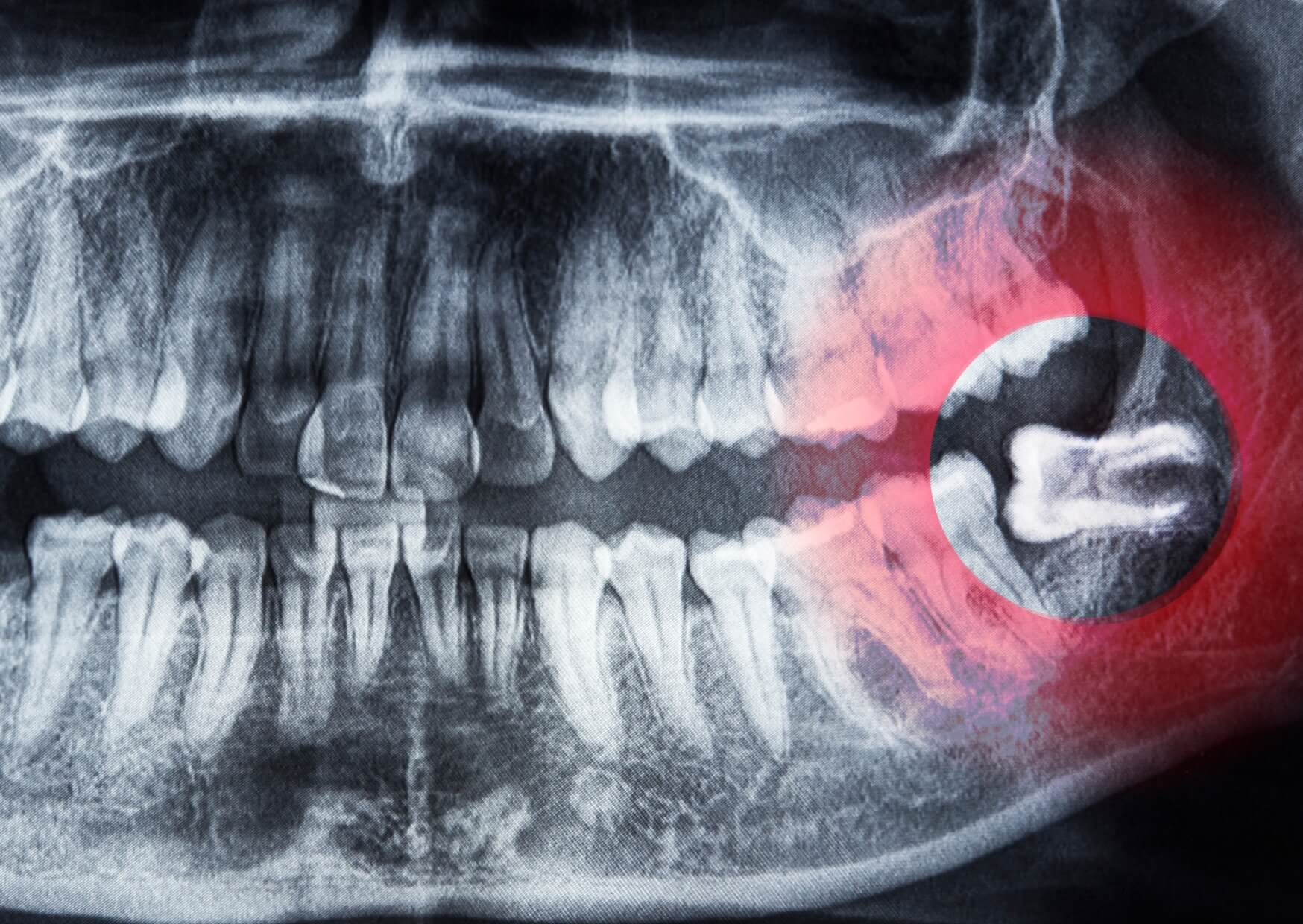
If you are wondering what a wisdom tooth coming in looks like, the first visible sign is often a small white point or ridge at the very back of the mouth, just behind the second molar. The gum in that area may also look raised, swollen, or slightly split as the tooth starts to erupt, which means it is breaking through the gum.
Not every wisdom tooth is easy to see. Some come in straight and gradually show more of the chewing surface, while others only partly emerge and leave a flap of gum covering part of the tooth. Some stay fully under the gum or bone, which is called an impacted tooth.
Cap Dental in Boynton Beach provides dental exams and the kind of evaluation described here.
A wisdom tooth that is erupting normally may look like a pale white bump that slowly becomes a recognizable tooth crown. The crown is the visible top part of the tooth, and at first, only one corner or cusp may show.
A partially erupted wisdom tooth often looks less distinct. You may see only part of the tooth, with red or puffy gum tissue still covering the rest.
If the tooth is impacted, there may be nothing visible at all. Instead, the area may look swollen or feel sore, and the tooth’s position is usually confirmed on a dental X-ray.
A wisdom tooth coming in does not always cause major symptoms, but it often causes noticeable changes in the back of the mouth. Mild discomfort may come and go as the tooth pushes through the gum.
Common signs include:
These signs do not always mean something is wrong. They do mean the area should be watched closely, especially if symptoms are getting worse instead of better.
Some irritation is common when a wisdom tooth starts to break through. The gum may look pink to red, feel tender, and stay mildly swollen for days or longer as the eruption continues.
What is more concerning is worsening pain or swelling instead of gradual improvement. If the gum becomes very red, drains pus, bleeds easily, or develops a foul smell, an infection may be present.
A partially erupted wisdom tooth can trap bacteria and food under the gum flap. This can lead to pericoronitis, which is inflammation around a partially erupted tooth and a common reason people seek urgent dental care.
An infected wisdom tooth area may look swollen, shiny, and deep red. The gum may appear enlarged enough to cover more of the tooth, and there may be yellow or white drainage if pus is present.
Pain can spread into the ear, throat, or jaw. In some cases, the lymph nodes under the jaw become tender, and opening the mouth may feel limited.
Seek prompt emergency care if there is facial swelling, fever, trouble swallowing, or difficulty breathing. These symptoms can signal a more serious infection and should not wait.
Wisdom teeth are the last molars to develop, usually in the late teens or early twenties. By that time, there may not be enough room in the jaw for the tooth to erupt into a healthy position.
Some wisdom teeth tilt forward toward the next molar, angle backward, or stay trapped under the gum. Others erupt only partway, which can make the area look uneven and harder to clean.
This is one reason appearance alone does not tell the whole story. A tooth that looks only slightly visible may still be pressing against the neighboring molar under the surface.

A dentist will examine the gum tissue, look for signs of infection, and check whether there is enough space for the tooth. The position of the tooth, the health of the neighboring molar, and how far the tooth has erupted all matter.
Digital X‑rays are often the most useful part of the evaluation. They can show whether the wisdom tooth is straight, impacted, pressing against another tooth, or associated with bone loss, decay, or a cyst.
Many people wait too long because the area only hurts off and on. Intermittent symptoms can still point to repeated inflammation or damage to the tooth in front of it.
If the wisdom tooth is coming in straight and there is enough room, the dentist may simply monitor it over time. That usually means checking symptoms, gum health, and X-rays at regular visits.
If the tooth is partly erupted, hard to clean, or causing repeated inflammation, treatment may be recommended. In many cases, that means wisdom tooth extraction.
The right plan depends on the tooth position, your age, symptoms, and overall oral health. General information can help you recognize patterns, but a dental exam is what turns those patterns into safe, personalized advice.
Keep the area as clean as you comfortably can with normal brushing, especially around the back molar. Soft foods may feel easier if chewing irritates the gum.
Do not try to cut the gum, press on the area aggressively, or do any at-home procedure to expose the tooth. If pain, swelling, bad taste, or limited mouth opening is getting worse, the safest next step is to arrange a dental evaluation.
If you are noticing a new white bump, swollen gum behind the last molar, or repeated soreness in the back of the jaw, a dentist can confirm whether it is a wisdom tooth coming in and whether it is doing so safely. Consider scheduling an exam to get a clear diagnosis and next steps.
Cap Dental in Boynton Beach provides dental exams to evaluate erupting wisdom teeth and serves patients from nearby Lake Worth and Lantana. Call (561) 560-8787 to schedule.
Yes. Some wisdom teeth erupt with little or no discomfort, especially if there is enough space and the tooth comes in upright.
No. Some remain fully under the gum or bone and are only seen on X-rays. Others erupt only partway and leave part of the crown covered.
They often start to erupt in the late teens or early twenties, but timing varies. Some appear later, and some never erupt.
No. Swelling in that area can have other causes, including gum infection, irritation, or problems with the nearby molar. Persistent or painful swelling should be checked by a dentist.
Schedule an exam if the area is painful, swollen, hard to clean, or repeatedly irritated. Seek urgent care sooner if there is fever, facial swelling, pus, trouble swallowing, or difficulty opening the mouth.