capdental (2)

Do Teeth Whitening Strips Work?

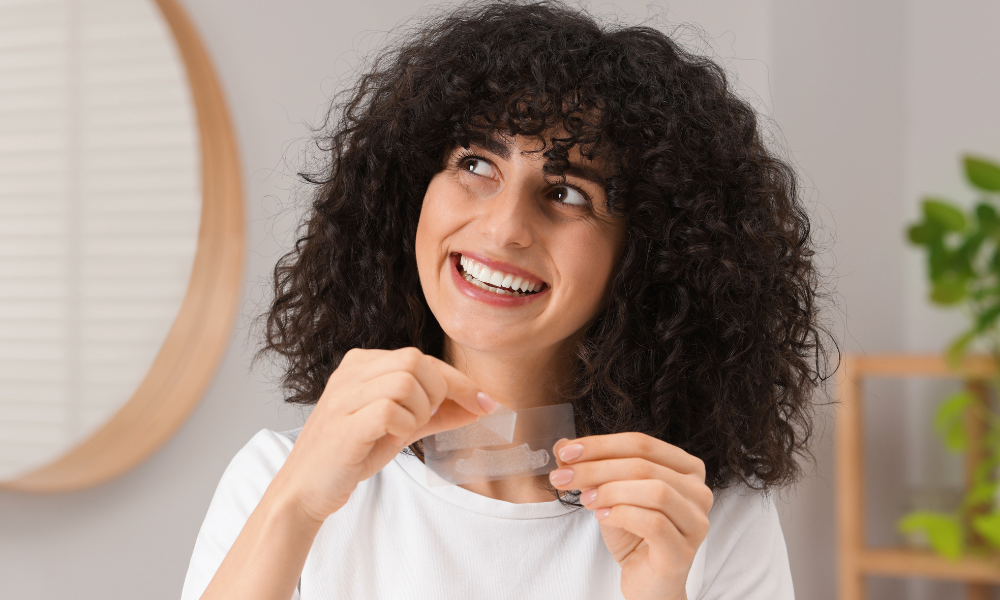
woman smiling while holding teeth whitening strips before application at home

Teeth whitening strips may help improve tooth color, but results are typically limited to mild-to-moderate surface stains. Many users may notice a 1–2 shade improvement within 7–14 days, depending on enamel condition, stain type, and consistency of use. At Cap Dental, whitening strips are often considered a starting option, but outcomes may vary based on how deeply discoloration extends within the tooth.

Quick Facts

  • What it is: Over-the-counter strips coated with peroxide-based whitening gel
  • Who it is for: Patients with surface stains from coffee, tea, or smoking
  • Main benefits: Affordable, convenient, gradual whitening
  • Limitations: Less effective on deep stains or dental restorations
  • Timeline / durability: Results may appear in 3–14 days and may last up to 6 months

How Do Teeth Whitening Strips Work?

Whitening strips may help lighten teeth by breaking down stain molecules within enamel.

  • Hydrogen peroxide may diffuse into enamel and interact with discoloration
  • Breaks down chromogens, which are pigment compounds responsible for staining
  • Reduces visible stain concentration with repeated exposure

Example: Yellow discoloration from coffee consumption may gradually fade with consistent use.

Because enamel is semi-permeable, whitening agents may reach shallow internal layers, but deeper stains may remain unaffected.

Types of Stains and Why They Matter

Stain classification determines how effective whitening strips may be.

  • Extrinsic stains
    Located on the enamel surface and commonly caused by diet or lifestyle
    Example: Coffee, tea, tobacco
    → Often respond well to whitening strips
  • Intrinsic stains
    Located within the tooth structure
    Example: Medication-related discoloration or trauma
    → May respond minimally
  • Age-related discoloration
    Combination of enamel thinning and dentin exposure
    → Results may vary depending on severity

If discoloration extends beyond enamel, then whitening strips may not fully address the issue.

How Effective Are Whitening Strips?

Whitening strips may provide visible improvement, but effectiveness depends on stain depth and consistency.

  • May improve recent or mild staining
    Example: Early discoloration from dietary habits
  • May have limited impact on long-term staining
    Example: Deep stains embedded within dentin
  • Do not affect restorative materials
    Example: Crowns, veneers, and fillings remain unchanged
  • May produce gradual shade change
    Example: 1–2 shades after completing treatment

If whitening appears uneven, then stain distribution or enamel variation may be contributing factors.

How Fast Do Results Appear?

Whitening strips may begin to show results within a few days, but full effects depend on consistent application.

  • Initial improvement may appear within 3–7 days
  • Full results may develop in 7–14 days
  • Results may plateau after consistent use

If application is inconsistent, then whitening progress may be reduced.

How Long Do Whitening Results Last?

Whitening results from strips may fade over time depending on daily habits and enamel exposure.

  • Results may last 3–6 months
    Duration varies based on diet and oral hygiene
  • Frequent staining foods may shorten results
    Example: Coffee, tea, red wine, or smoking
  • Good oral hygiene may help maintain brightness
    Brushing and flossing may slow stain accumulation
  • Touch-up treatments may be needed
    Occasional reuse may help maintain shade improvements

If staining habits continue, then discoloration may gradually return.

Whitening Strips vs Professional Whitening

Professional whitening may provide more controlled and noticeable results compared to strips.

Whitening Strips

  • Lower peroxide concentration
  • Slower whitening progression
  • Limited customization

Professional Whitening

  • Higher concentration under supervision
  • Faster response time
  • More uniform application

Dentist-supervised whitening may allow for better coverage and monitoring, which may improve consistency of results.

If more noticeable whitening is desired, then professional teeth whitening may be considered.

Are Whitening Strips Safe?

Whitening strips are generally considered safe when used as directed.

  • May cause temporary tooth sensitivity
  • May cause mild gum irritation
  • Require proper placement to avoid uneven whitening

If discomfort occurs, then reducing frequency may help manage sensitivity.

When Whitening Strips May Not Work

Whitening strips may be less effective when underlying conditions are present.

  • Deep internal discoloration
  • Gray or brown staining
  • Presence of restorations
  • Plaque or tartar buildup

If buildup is present, then whitening agents may not fully contact the enamel surface.

How to Maximize Results from Whitening Strips 

Whitening strip effectiveness may improve when usage and oral conditions are optimized.

  • Apply to clean, dry teeth
    Residue or moisture may reduce gel contact with enamel
  • Follow consistent timing and duration
    Skipping applications may reduce overall whitening effect
  • Avoid staining foods during treatment
    Example: Coffee, red wine, or dark sauces may interfere with results
  • Maintain oral hygiene during whitening cycle
    Brushing and flossing may help reduce new stain accumulation
  • Use as directed, not excessively
    Overuse may increase sensitivity without improving outcomes

If results appear uneven, then repositioning strips or adjusting routine may help improve consistency.

Common Mistakes When Using Whitening Strips

Whitening strip results may be affected by how they are used during the treatment period.

  • Applying strips to unclean teeth
    Residue or plaque may block contact between the gel and enamel
  • Leaving strips on longer than directed
    Extended exposure may increase sensitivity without improving results
  • Using strips inconsistently
    Skipping days may reduce whitening effectiveness
  • Misaligning strips on teeth
    Uneven placement may lead to patchy or inconsistent whitening
  • Continuing staining habits during treatment
    Example: Drinking coffee or wine may counteract whitening progress

If results appear uneven or minimal, then reviewing application technique may help improve outcomes.

Who May Not Be Ideal Candidates for Whitening Strips

Whitening strips may not be suitable for all patients depending on oral health conditions.

  • Individuals with gum recession or exposed roots
    May experience increased sensitivity
  • Patients with untreated cavities or enamel damage
    Whitening agents may cause discomfort
  • Those with extensive dental restorations
    Results may appear uneven
  • Individuals with severe intrinsic discoloration
    May require alternative cosmetic treatment

If underlying dental conditions are present, then evaluation may be recommended before starting whitening.

How Whitening Fits Into Overall Dental Care

Whitening outcomes may improve when combined with preventive and cosmetic care.

A comprehensive dental approach may support both whitening results and overall oral health.

FAQ

Do whitening strips work on yellow teeth?
Yes. Yellow stains may respond better compared to darker discoloration.

How long do results last?
Results may last several months depending on habits and oral care.

Can whitening strips damage enamel?
They are generally safe when used properly, but excessive use may increase sensitivity.

Are whitening strips better than whitening toothpaste?
Yes. Whitening strips may provide stronger results due to peroxide content.

Can I use whitening strips daily?
Usage depends on product instructions, and overuse may increase sensitivity.

What to Do Next

Tooth discoloration may develop from surface stains, internal changes, or structural conditions. The most appropriate whitening method depends on stain type, enamel condition, and desired outcome.

If you are noticing yellowing from food or beverages, then whitening strips may help improve brightness. If this applies but results appear limited or uneven, then a professional evaluation may help determine whether deeper whitening or cosmetic treatment may be more appropriate.

You can schedule an appointment with Cap Dental in Boynton Beach to evaluate your teeth and explore whitening options based on your condition.

Schedule Your Visit Today
Quality dental care is just a call or click away.
Call (561) 270-5990Request an Appointment
Copyright © Cap Dental. All rights reserved | Privacy Policy | Terms of Use | Sitemap | Website by SERP Dental, a division of AscendPoint Agency.
menucross-circle