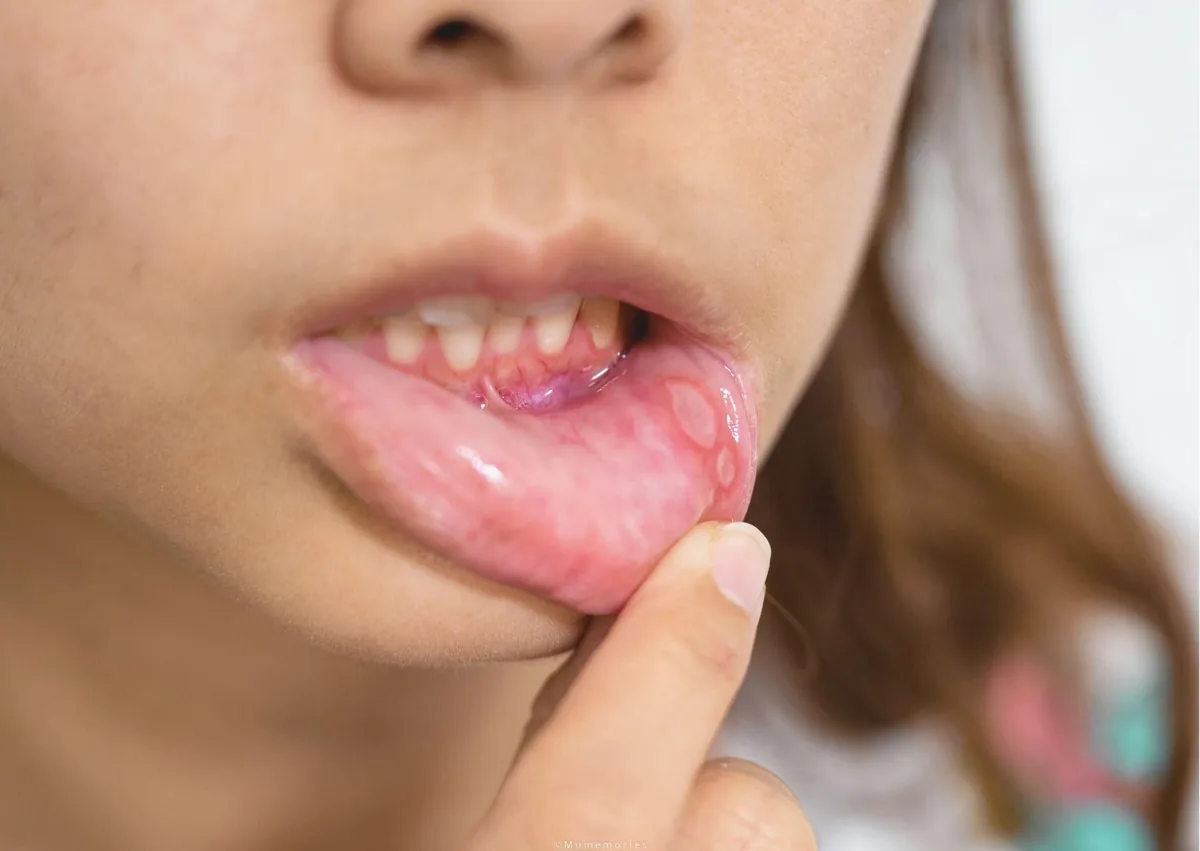
Most canker sores heal on their own in 7 to 14 days. Pain often starts to ease within a few days, even if the sore is still visible. If a sore lasts longer than two weeks, gets larger, or makes eating and drinking hard, it should be checked by a dentist or medical professional.
If a sore has lasted more than two weeks or keeps hurting, a dental exam can help confirm whether it is a typical canker sore or something else that needs attention. At Cap Dental in Boynton Beach, FL, we evaluate oral sores carefully so you understand the cause, what to expect, and whether treatment could help.
A canker sore, also called an aphthous ulcer, is a small, shallow sore that forms inside the mouth. It often has a white, yellow, or gray center with a red border. Many people notice burning, tingling, or tenderness before or during the sore.
These sores commonly appear inside the lips or cheeks, under the tongue, on the gums, or on the soft palate. They are different from cold sores, which usually form on or around the lips and are caused by the herpes simplex virus.
Canker sores are not contagious. They do not spread through kissing, shared utensils, or other everyday contact.
Most canker sores are minor and heal within two weeks without scarring. Larger or deeper sores can last several weeks and may leave a scar. Clusters of small sores can also join together and create a more painful area.
The exact cause is not always clear. Common triggers may include:
If sores are frequent, severe, or slow to heal, there may be an underlying issue. In some cases, repeated sores are linked to nutritional, gastrointestinal, or immune-related conditions. A clinician can help decide whether further evaluation is needed.
Avoid spicy, acidic, salty, or sharp foods until the area feels less irritated. Soft foods, cool drinks, and gentle brushing with a soft-bristled toothbrush can make the mouth more comfortable. Mild saltwater rinses may also help reduce irritation.
Over-the-counter oral gels, protective pastes, or antiseptic rinses may give temporary relief when used as directed. Ask a dentist, physician, or pharmacist before using these products for a child, during pregnancy, or if medication interactions are a concern.
Do not pick at the sore or put aspirin directly on it. That can irritate the tissue and slow healing. If a sharp tooth, broken filling, braces, or a denture keeps rubbing the area, dental treatment may be needed to remove the source of irritation.
A typical canker sore should gradually become less painful before it fully disappears. Even when the white or yellow center remains visible, the discomfort often improves first. If pain worsens instead of improving, that is a reason to get it checked.
Keeping a simple record of foods, stress, oral products, and flare-up timing may help you spot patterns. Chewing slowly, protecting the mouth during sports, and fixing rough dental surfaces can also lower the chance of injury-related sores.
Good oral hygiene still matters, but brushing should be gentle around a sore area. Routine preventive care can help identify local irritants or other factors that may be contributing to repeat outbreaks. If a toothpaste or mouth rinse seems to trigger sores, ask a dental professional about less irritating alternatives.

Schedule an evaluation if a sore has not healed within two weeks, keeps coming back, is unusually large, or becomes more painful over time. You should also seek care for multiple sores or for sores that come with fever, swollen glands, diarrhea, weight loss, or skin or eye symptoms.
Seek emergency dental care if pain prevents drinking, there are signs of dehydration, swelling is spreading, or breathing or swallowing becomes difficult. A persistent mouth ulcer is not always a canker sore, so an exam matters when the appearance or healing pattern is unusual.
Arrange a dental exam or medical evaluation instead of continuing home treatment for a persistent spot. A dentist can check for ongoing irritation, infection, medication effects, or another type of oral lesion, and may recommend an oral cancer evaluation to rule out a more serious cause.
Depending on the findings, treatment may include a prescription rinse, a topical medication, smoothing a rough dental surface, or referral for medical care. If your sore is persistent, painful, or interfering with eating, an exam to get a diagnosis is your best next step to get treatment options quickly.
Call Cap Dental for dental exams in Boynton Beach, with offices serving Lake Worth and Lantana, FL, at (561) 560-8787 to schedule an appointment or ask about same-day availability.
Pain may improve within three days, but full healing usually takes 7 to 14 days. Very small sores may resolve sooner.
A large sore or one that keeps getting irritated may heal more slowly. Still, a spot that lasts longer than two weeks may not be a typical canker sore and should be evaluated by a dentist or medical professional.
No. Unlike cold sores caused by the herpes simplex virus, canker sores do not spread from person to person.
No. A canker sore is an open ulcer, not a blister that needs to be drained. Squeezing, scraping, or picking at it can make the pain worse and delay healing.